
 Reporter Name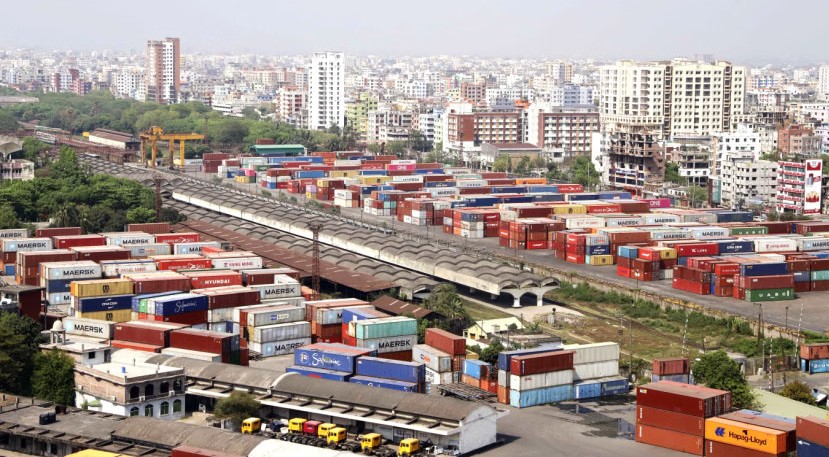
Dhaka’s only rail-linked inland container depot (ICD) at Kamalapur was built in 1987, when the city was far smaller, trade volumes were limited, and containerised transport was only beginning to emerge. Four decades later, the situation has changed entirely. The depot now sits at the heart of one of the world’s most crowded capitals, surrounded by traffic congestion, inadequate access roads, and virtually no room for expansion. Bangladesh Railway can operate only two container trains daily between Chattogram and Kamalapur due to capacity or path clearance limitations on the Tongi-Kamalapur line.
To address this, Bangladesh Railway has long planned to shift its container operations to a new ICD at Dhirashram, near Tongi. The project aims to handle 400,000 TEUs (20-foot equivalent units) of containers a year—five times Kamalapur’s capacity—and to transform rail freight logistics for the capital. On paper, it seems ideal. In practice, however, Dhirashram comes with major challenges. To connect the site, a new seven-kilometre rail link must be built from Pubail, which alone requires costly engineering works and extensive land acquisition.
The project’s cost is staggering: the government has already approved over Tk 3400 crore just for land and the new rail link, while the total estimate stands at $774.56 million under a public-private partnership model. Land prices in Gazipur, a dense industrial zone, continue to rise, and relocation issues are unavoidable. The Planning Commission itself has expressed concern that placing an ICD inside the Gazipur City Corporation area could worsen congestion and has advised exploring alternatives farther out, such as Kaliganj.